

Interior Repair · Houston, Texas
Auto Headliner Repair in Houston
Sagging, torn, loose or water-damaged headliners on cars, trucks, SUVs and vans.
The headliner is the fabric-covered board that forms the ceiling of your vehicle. In Houston’s heat the foam layer behind that fabric is what usually gives out first, and once it does the material has nothing left holding it up.
Sunroof King has been working on vehicle interiors and roofs in Houston since 1979. We replace headliner material properly — the board comes out, the old fabric and deteriorated foam are removed, new material is fitted, and the interior goes back together.
Sagging Headliner Repair
The Most Common Headliner Complaint We See
A headliner is not a single piece of fabric. It is a moulded board with a thin layer of foam bonded to it, and the visible fabric is bonded to that foam. The fabric itself is usually still in reasonable condition when a headliner fails — what has actually broken down is the foam behind it.
As that foam deteriorates it turns powdery and loses its grip, so the fabric separates from the board and begins to hang. It often starts as a small bubble or a drooping corner near the rear window or around a roof opening, then spreads until the material is resting on the seats or brushing the top of your head.
This is why the common quick fixes do not hold. Pushing the fabric back up does nothing about the foam that is no longer there to hold it. Spraying adhesive through the fabric bonds it to a layer that is already crumbling, and pins or tacks hold a few points while the material keeps sagging between them. None of those address the actual failure, and some of them make the eventual proper repair harder by leaving adhesive or holes in the material.
The professional repair is to remove the board, strip the old material and the failed foam off it entirely, and bond new headliner material to a properly prepared surface.
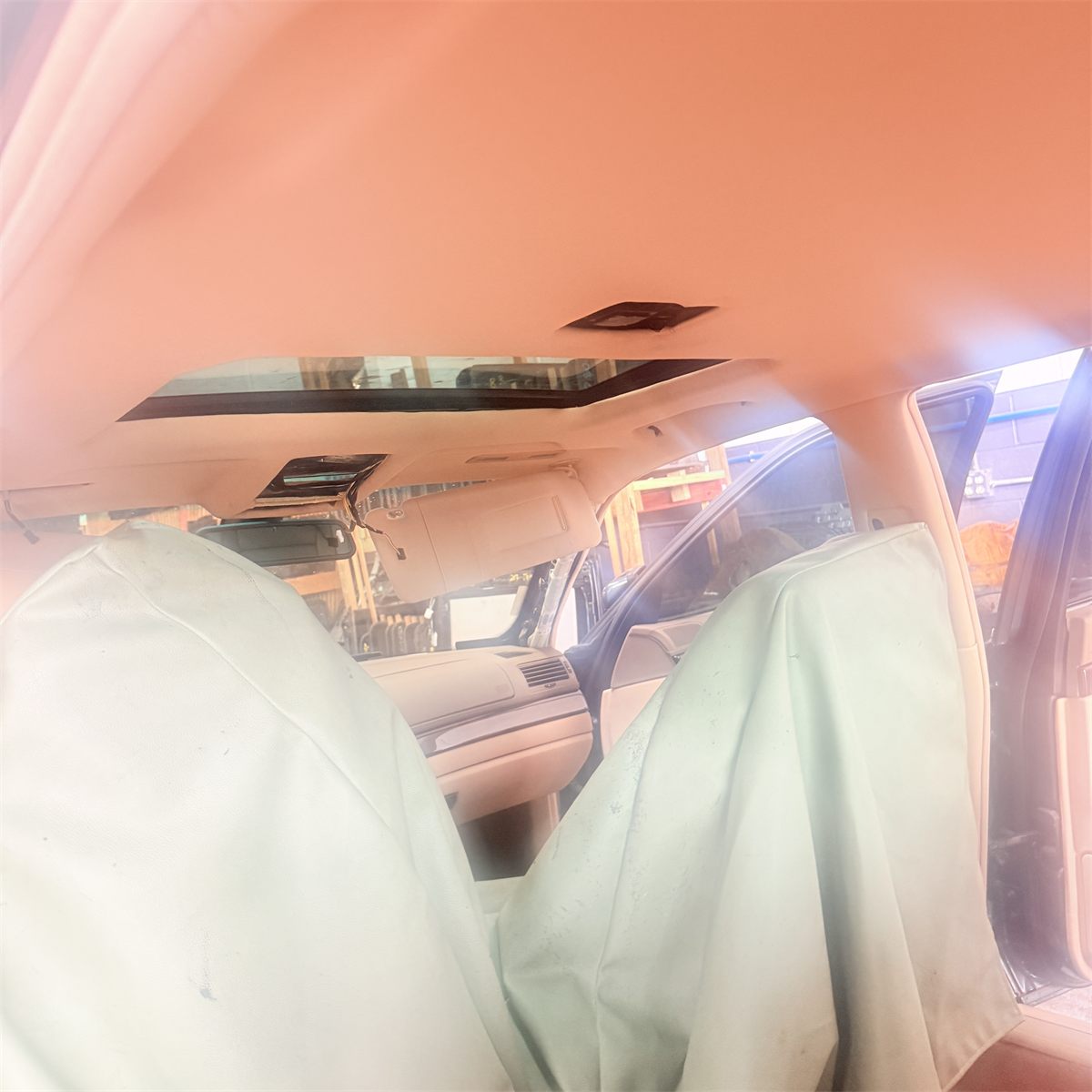
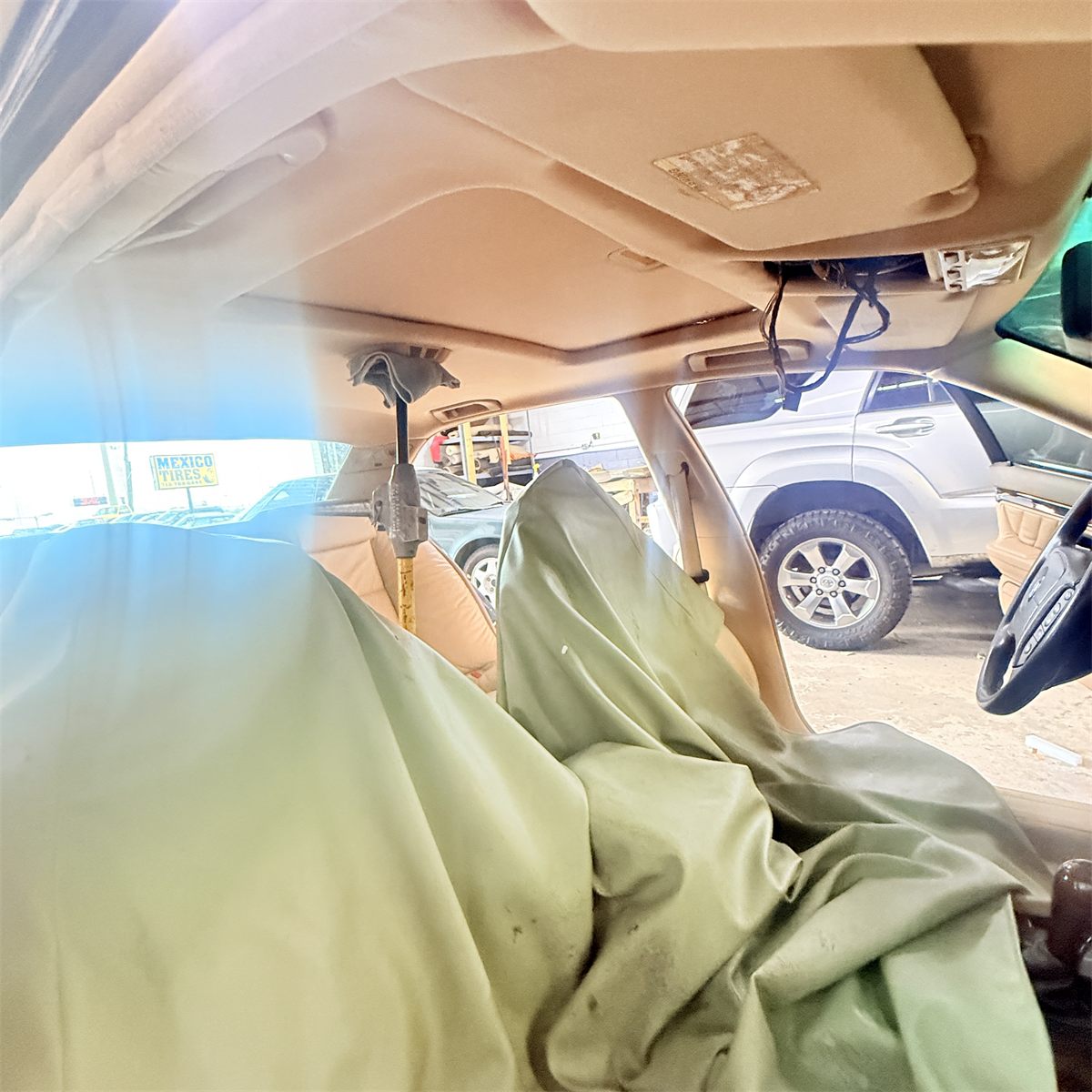
A headliner that has separated from its board, and an interior covered before the work begins — both at our Houston shop.
Torn, Loose Or Damaged Headliner Material
Not every headliner fails by sagging in the middle. Deterioration frequently begins at the edges and around anything cut into the board, because those are the places the material is stretched, folded or held under a trim piece.
Around roof openings. On a vehicle with a sunroof or panoramic roof, the headliner has a large opening cut through it, and the material is wrapped around that edge. It is a natural place for material to lift, fray or pull back.
At the perimeter and along the pillars. The outer edges tuck up behind the trim that runs around the roofline. Once material starts working loose there, gravity does the rest.
Around visors, handles and overhead consoles. Every visor pivot, grab handle, dome light and console is a fixing point through the board. Fabric that has been disturbed around those — sometimes by a previous repair — tends to lift first.
Tears, burns and stains. Physical damage will not repair itself, and unlike sagging it does not spread gradually; the material simply needs replacing.
Where the fabric has failed, replacing the material is the fix. Where a trim piece or fixing has also been damaged, that gets identified while the interior is apart rather than after everything has gone back together.
Water-Damaged Headliners
Brown staining, patchy discolouration, a musty smell, or material that has come loose in one specific area rather than across the whole roof can all be related to water that has been in the headliner at some point. Water travels along the board and through the foam, so the mark you can see is not always directly beneath where the water came in.
An important distinction: replacing a water-damaged headliner replaces the damaged material. It does not fix whatever let the water in. If a roof, seal or drainage problem is still active, new material can end up marked the same way.
So where staining suggests water has been involved, the source is worth diagnosing separately. On a sunroof-equipped vehicle that often means the drains or the seal rather than the glass itself — our Sunroof Leak Repair page explains how those are traced. Because we work on both roofs and interiors, we can look at the two together rather than treating the headliner in isolation.
How A Headliner Is Actually Replaced
Four Stages, All Carried Out In Our Shop
Headliner Removal
The board cannot come out until everything holding it is removed. Depending on the vehicle that can mean pillar trim, grab handles, sun visors, dome lights, overhead consoles, seat belt trim and roof-opening trim. The interior is covered first, and components are taken off in order so the board can be brought out without bending or damaging it.
Removing The Old Material And Foam
With the board on the bench, the old fabric is stripped off and the deteriorated foam residue is removed from the board surface. This is the stage that gets skipped by quick fixes, and it matters: new material bonded over old crumbling foam is bonded to nothing. The board is cleaned and prepared before anything new goes on.
Fitting New Headliner Material
Appropriate automotive headliner material is bonded to the prepared board and worked around its shape — the contours, recesses and the edges of every opening, including the sunroof aperture where the vehicle has one, so it sits smooth rather than bridging or wrinkling.
Reinstallation And Fit Check
The finished board goes back into the vehicle and every component that came off is refitted. Trim, visors, handles and consoles are checked for correct fit and alignment before the vehicle is handed back.
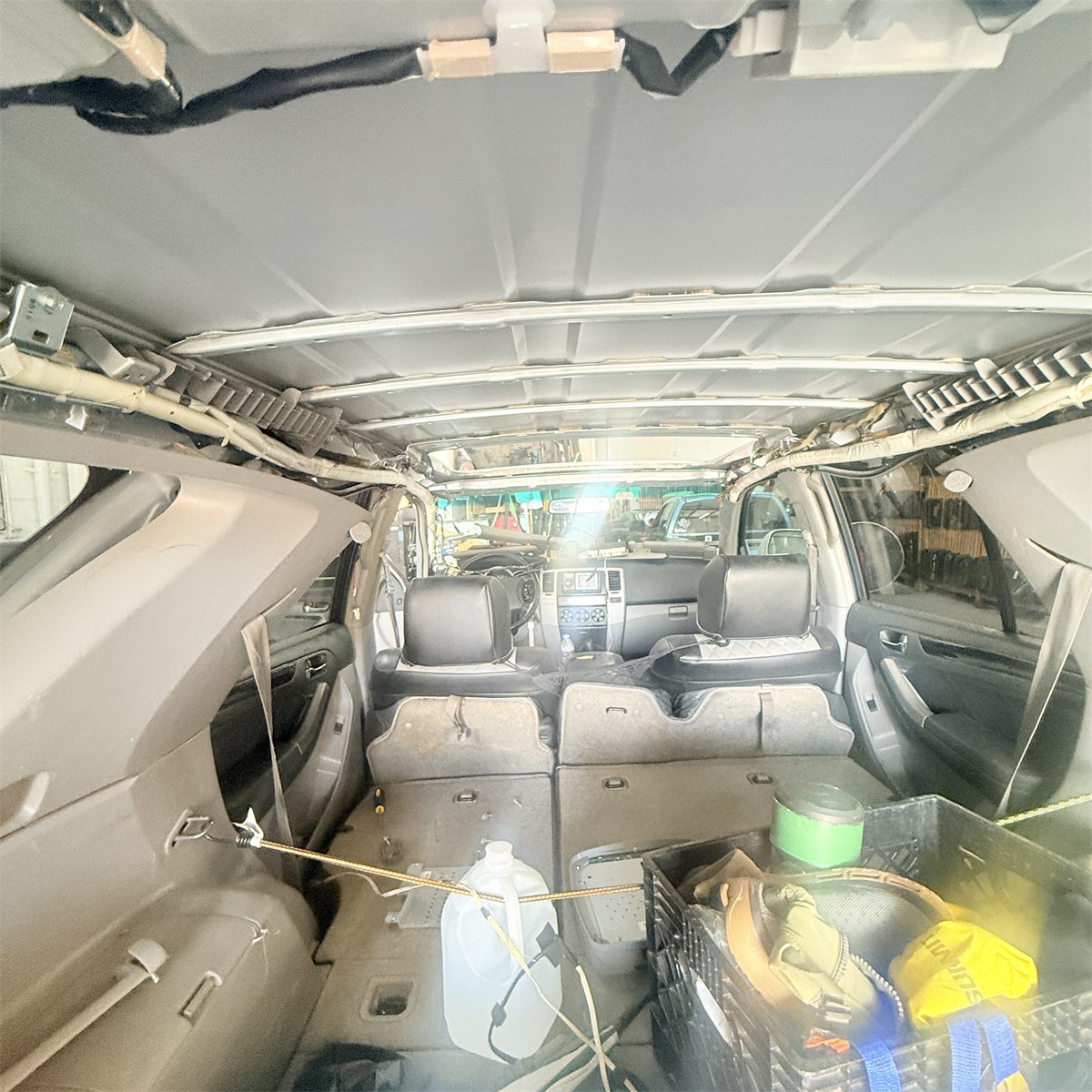
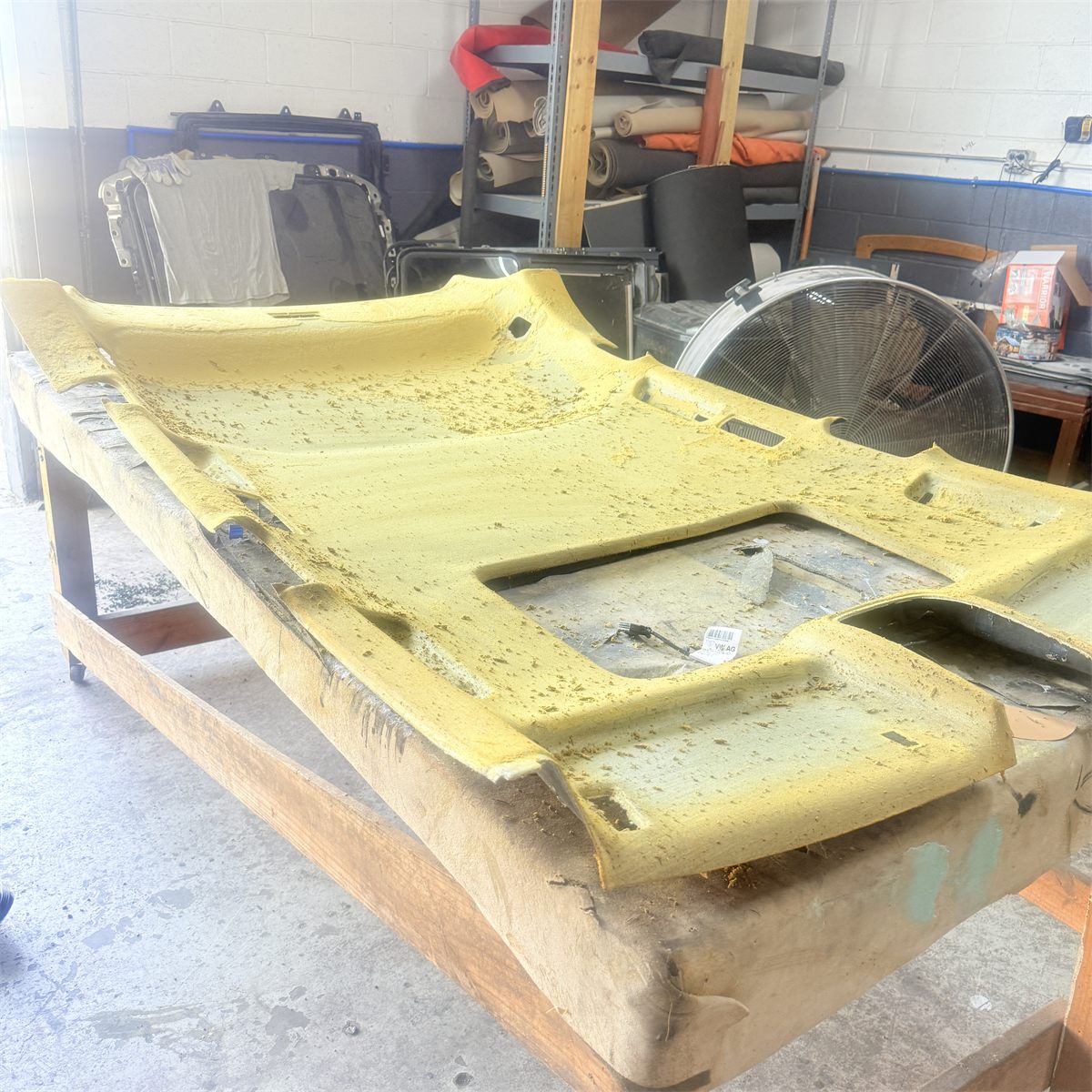
The board out of the vehicle, and the same kind of board on our bench with the old fabric off and the failed foam still to be cleaned back.
Headliner Work In Our Shop
Filmed At 9330 Westpark Dr
A short clip of headliner work being carried out at our Houston shop — our bay, our bench and our technicians. It is not a stock clip or a manufacturer video.
The video does not download until you press play, so it will not slow the page down on a phone or a slow connection.
Headliners And Sunroof Or Panoramic Roof Repair
Headliner work and sunroof work overlap far more than most people expect, and this is where being a sunroof shop matters.
The roof cassette, the tracks and lift mechanism, the drain tubes and the sunshade assembly all sit in the space between the outer roof panel and the headliner. There is no way to reach any of them from outside the vehicle. On many major sunroof and panoramic roof repairs the headliner therefore has to be lowered or taken out completely before the actual repair can even begin — and then refitted afterwards.
That cuts both ways, and both directions are worth knowing about:
If your roof needs work, the headliner is coming down anyway. If the material was already sagging or stained, that is the sensible moment to deal with it. The labour of removing and refitting it is being done regardless.
If your headliner needs replacing on a sunroof-equipped vehicle, the roof is exposed while the board is out. It is a good opportunity to have the drains and mechanism looked at, particularly if there has been any sign of water.
Sunroof King has been working on sunroof-equipped vehicles in Houston since 1979, so dropping a headliner to reach a roof assembly — and putting it back correctly afterwards — is routine work here rather than something unfamiliar. If your roof itself needs attention, see our Panoramic Sunroof Repair and Factory Sunroof Repair pages.
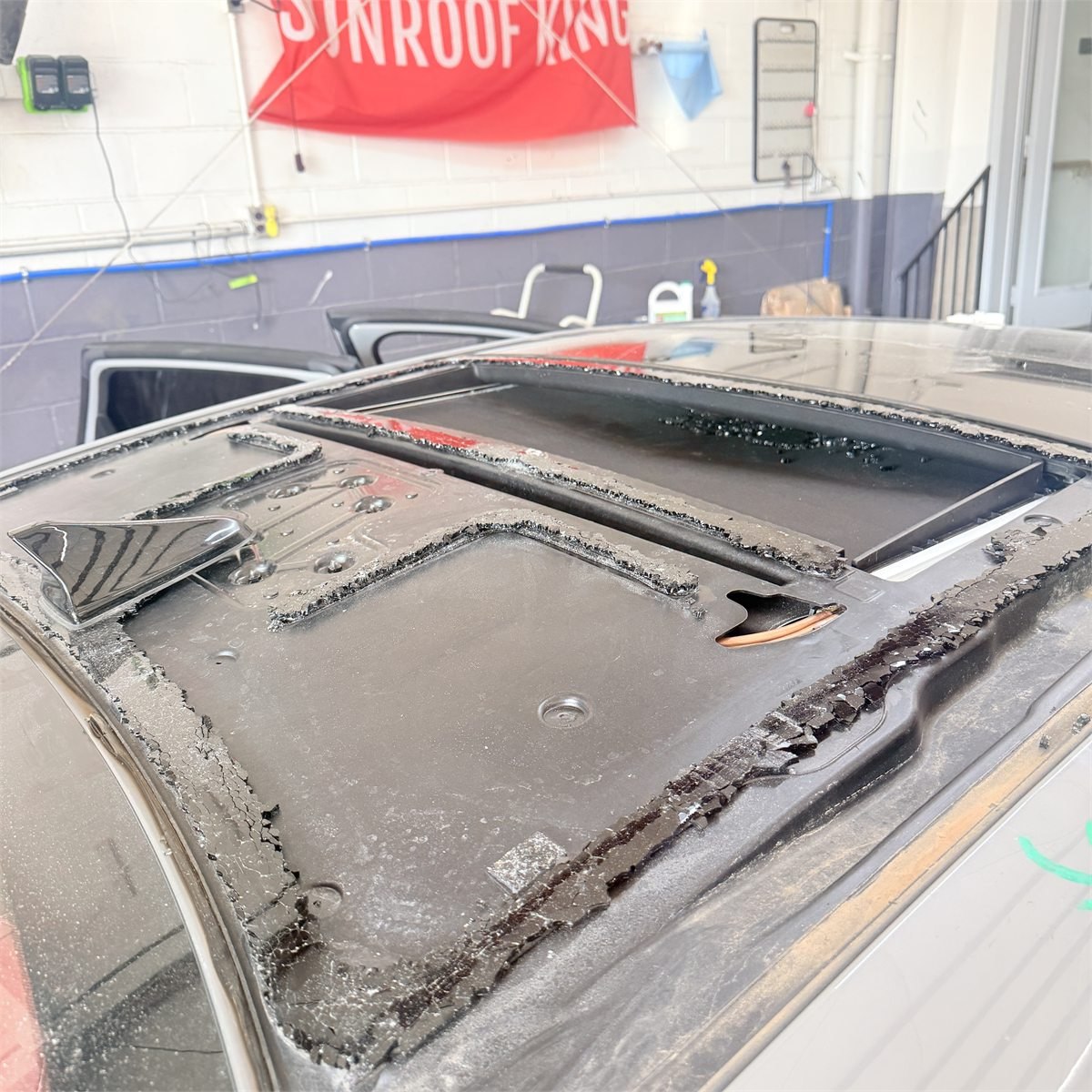
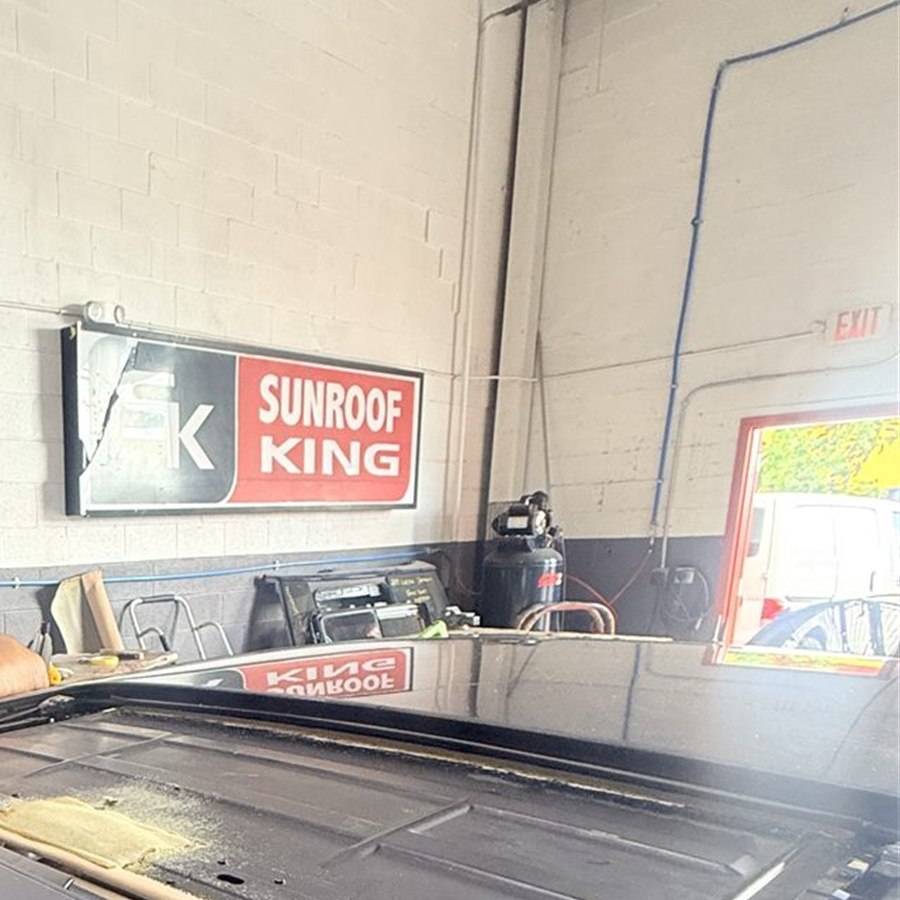
The roof assembly and the sunroof opening itself, reached with the headliner out — photographed at our Houston shop.
Vehicles we work on. Headliner work comes through the shop on a wide range of vehicles. If you are not sure whether yours is something we can help with, call or text and ask.